

Challenges, Ethics, and Conclusion
If asked what is fostering , a simple answer is that it is rooted in hope and exist within complexity.
Behind every placement decision are real children, real families, and real pressures. Sometimes urgent, sometimes uncertain. While policies and procedures exist to guide safe practice, ethical foster care depends on how those processes are used, especially when circumstances are far from ideal.
Understanding these challenges is essential if we are to protect children’s emotional wellbeing and ensure that foster care truly supports healing rather than unintentionally causing further harm.
Challenges and Ethical Considerations in Placement Decisions
One of the most difficult situations in foster care is an emergency placement. These occur when a child needs a safe home immediately often with limited information, heightened emotions, and little time to prepare.
Behind these urgent decisions sits a structured placement process, designed to safeguard children and ensure accountability. However, the process also highlights just how quickly decisions may need to be made and where ethical pressures can arise.
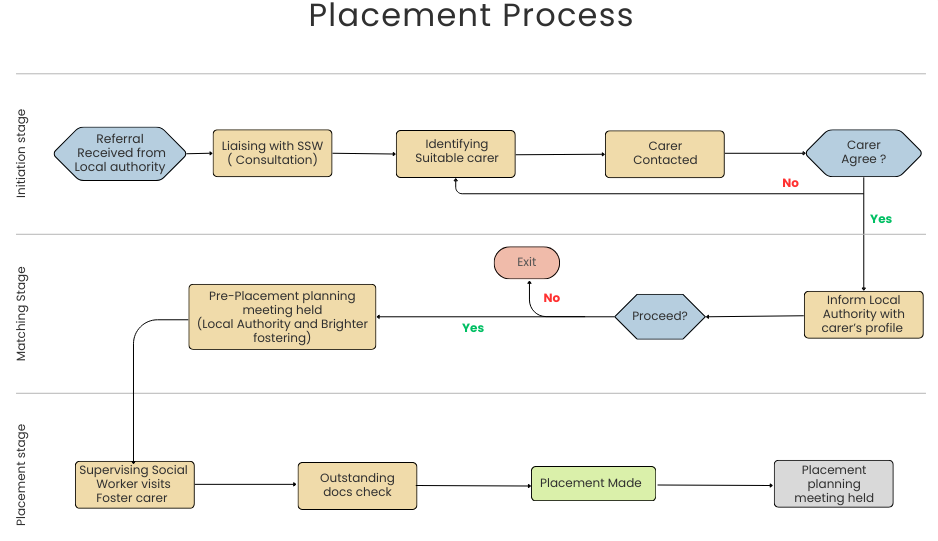
The diagram illustrates how referrals are received, information is gathered, carers are identified, and decisions are made….sometimes within hours. While this structure is essential, it also reveals the emotional risk points. When time is short, children may arrive frightened and disoriented, and carers may have limited opportunity to prepare emotionally or practically.
From a psychological perspective, rushed placements increase the risk of poor matching. Even with the best intentions, speed can place strain on both the child and the carer, increasing the likelihood of placement instability.
Equally important is listening to the child. Wherever possible, children should be involved in placement decisions and transitions. Even small choices like what they bring with them, how their room is prepared, or how introductions are handled, can help restore a sense of control in a situation where so much feels decided for them.
Ethical foster care means asking not only “Can this placement work?” but “Does this placement respect who this child is?”
At Brighter Fostering, these risks are recognised. Staff work closely with local authorities to gather as much information as possible even under pressure to reduce emotional harm and ensure that decisions remain child-centred rather than convenience-led.
Why Psychologically Informed Practice Matters
The placement process diagram highlights an important truth: foster care is not a single decision, but a series of moments where empathy, judgement, and ethical responsibility are required.
Psychologically informed practice ensures that:
- Speed never outweighs emotional safety
- Procedure never replaces compassion
- The child’s wellbeing remains central, even under pressure
When carers, professionals, and local authorities work together with a shared understanding of trauma, attachment, and identity, foster care becomes more than a safeguarding response, it becomes a pathway for healing.
Conclusion: Putting the Child First, Always
Foster care is not just about meeting immediate needs, it is about shaping futures. Across this series, we have explored how thoughtful matching, careful transitions, strong support systems, and ethical decision-making can transform a child’s experience of care.
Behind every placement is a child who needs to feel safe, valued, and understood. Achieving that requires empathy, preparation, and ongoing support from carers, professionals, and organisations working together.
At Brighter Fostering, the commitment is clear: to place children at the heart of every decision, to work in partnership with local authorities, and to ensure that care is guided not only by policy, but by humanity.
When foster care is approached with psychological insight and ethical care, it has the power to do more than protect.
It has the power to heal.
Recent Comments