Yes, you can foster if you rent your home. Whether you rent privately, from your council or through a housing association, you can enquire about becoming a foster carer. At Brighter Fostering, we ask renters to have a secure tenancy, their landlord’s consent and a suitable spare bedroom.
Do I need my landlord’s permission to foster?
Speak to your landlord or housing provider about getting permission to foster in your home. Start by reading your tenancy agreement, then ask who can confirm permission in writing. If you rent privately through a letting agent, they can tell you who to contact. If you rent from a council or housing association, your housing officer or tenancy team is a good first point of contact.
You can speak to us before approaching your landlord. As part of your assessment, we’ll ask to see your tenancy agreement to check that your home is secure, and we’ll contact your landlord for a reference. It helps to have a copy of the agreement and your landlord’s contact details ready.
Do I need a spare bedroom to foster?
The spare bedroom can be a single or a double. It should be available for the child’s own use, with enough bedrooms for everyone else who lives there. A room of their own gives a child privacy and somewhere to unwind as they settle in. Our policy allows for exceptions in very specific circumstances involving infants. If you’re interested in caring for a baby and have questions about sleeping arrangements, ask our team what would apply to you.
If your spare room is currently a home office or a guest room, think about whether you can make it available for a child throughout their stay. If you’re unsure whether your space is suitable, talk it through with our team.
What will Brighter Fostering look at during the assessment?
Your assessing social worker will visit your home, get to know the people you live with and talk with you about how you would care for a child. We’ll start looking at the space and checking for any health and safety concerns during the initial home visit, before you’re invited to apply. Your assessing social worker will look at the home in more detail during the assessment. If you’re planning a move, mention it when you enquire so we can talk through the timing and what it could mean for your assessment.
If you rent your home and are wondering whether fostering could work for you, we’d love to hear from you. A short conversation with our Leeds team is a chance to ask questions about your tenancy, your spare room or the application process.
Every July, Disability Pride Month celebrates the achievements, identities and contributions of disabled people while raising awareness of equality, inclusion and accessibility.
At Brighter Fostering, we believe every child deserves the opportunity to feel safe, valued and supported to achieve their full potential. Disability does not define a child’s abilities or future. With the right support, encouragement and stable relationships, children and young people with disabilities can thrive in foster care.
The UK disability charity Scope describes Disability Pride Month as an opportunity for disabled people to celebrate their community, share experiences and challenge negative attitudes.
What is Disability Pride Month?
Disability Pride Month is an annual celebration that promotes understanding, challenges stereotypes and recognises disability as a natural part of human diversity. It encourages communities to celebrate differences and create environments where everyone feels respected and included.
Originally established to mark the anniversary of disability rights legislation, Disability Pride Month is now recognised worldwide as an opportunity to raise awareness, celebrate achievements and promote equal opportunities. It reminds us that everyone deserves respect, accessibility and the chance to participate fully in their communities, regardless of their abilities.
For fostering services, Disability Pride Month is also an opportunity to celebrate the resilience, talents and potential of children with disabilities and reinforce the importance of creating inclusive, supportive family environments.
Why Disability Pride Month Matters in Foster Care ?
Every child deserves to feel accepted, respected and valued, regardless of whether they have a disability or additional support needs. Creating an inclusive environment allows children to develop confidence, build meaningful relationships and feel a genuine sense of belonging.
Many children entering foster care have physical disabilities, learning disabilities, sensory impairments or additional emotional and developmental needs. Some may also be waiting for assessments or diagnoses while adjusting to life in a new home.
How Foster Carers Support Children with Disabilities
Children entering foster care come from a wide range of backgrounds and experiences. Some may have physical disabilities, learning disabilities, sensory impairments or additional needs, while others may be awaiting an assessment or diagnosis.
Like every child, they need stability, understanding and someone who believes in them.
Foster carers provide more than a safe place to live. They offer encouragement, stability and opportunities for children to grow and thrive. By working closely with professionals and creating an inclusive home environment, foster carers help children develop confidence and reach their full potential.
Providing a Safe and Stable Home
A stable home gives children the security they need to feel safe, build trust and establish routines. Foster carers create an environment where children feel listened to, respected and understood. Small adjustments to the home or daily routines can make a significant difference, helping children feel comfortable and supported while they settle into family life.
Encouraging Independence
Every child should have opportunities to learn new skills and become more independent. Foster carers encourage children to make choices, develop confidence and celebrate personal achievements at their own pace. Whether learning everyday life skills or achieving educational goals, recognising progress helps children build self-esteem and resilience.
Working with Professionals
Supporting a child with disabilities often involves working collaboratively with schools, healthcare professionals, therapists and social workers. Foster carers play an important role in communicating with professionals, attending meetings and ensuring children receive the services and support they need to achieve positive outcomes.
Celebrating Every Achievement
Success looks different for every child. Foster carers celebrate milestones both big and small, whether that is making a new friend, improving communication skills, reaching an educational goal or gaining confidence in everyday activities. Recognising achievements helps children feel proud of themselves and motivates them to continue progressing.
Every child’s journey is unique, and the support they receive should reflect their individual needs and strengths.
Do You Need Experience to Foster a Child with Disabilities?
One of the most common questions people ask is whether they need specialist experience before fostering a child with disabilities. The answer is no.
While experience in healthcare, education or caring roles can be valuable, the qualities that matter most are patience, compassion, resilience and a willingness to learn. Every child is different, and every fostering journey is unique.
At Brighter Fostering, we provide comprehensive training and ongoing guidance to help foster carers understand each child’s individual needs. With the right support and professional advice, many people discover they are capable of making a meaningful difference in a child’s life, regardless of their previous experience.
People from many different backgrounds can foster. Read more about who can become a foster carer.
How Brighter Fostering Supports Foster Carers
At Brighter Fostering, we understand that foster carers need the right support to provide the best possible care for children. That’s why we work alongside our carers throughout every stage of their fostering journey.
We provide comprehensive pre-approval and ongoing training, access to experienced supervising social workers, tailored guidance based on each child’s individual needs and 24/7 support whenever advice is needed. We also work closely with local authorities, education providers and healthcare professionals to ensure children receive coordinated care and access to appropriate services.
Our aim is to help foster carers feel confident, supported and equipped to provide safe, nurturing homes where children can thrive.
Frequently Asked Questions
What is Disability Pride Month?
Disability Pride Month is an annual celebration that recognises the achievements, identities and contributions of disabled people while promoting equality, inclusion and accessibility.
Can children with disabilities be fostered?
Yes. Children with physical disabilities, learning disabilities, sensory impairments and other additional needs can all benefit from foster care. Every child’s needs are different, and support is tailored to help them thrive.
Do foster carers receive support?
Absolutely. Foster carers receive training, guidance and ongoing support from their fostering agency, as well as working alongside schools, healthcare professionals and social workers to ensure children receive the care they need.
Interested in Becoming a Foster Carer?
If you’re caring, patient and committed to making a positive difference in a child’s life, fostering could be an incredibly rewarding experience.
Contact Brighter Fostering to learn more about becoming a foster carer and discover how we’ll support you every step of your fostering journey.
Become a Foster Carer with Brighter Fostering
If you’re caring, patient and passionate about helping children reach their full potential, fostering could be a rewarding opportunity. Whether you have previous experience or are just beginning to explore fostering, Brighter Fostering will support you with training, guidance and dedicated professional support every step of the way.
Get in touch with our team today to learn more about becoming a foster carer and how you could help change a child’s life.
If asked what is fostering , a simple answer is that it is rooted in hope and exist within complexity.
Behind every placement decision are real children, real families, and real pressures. Sometimes urgent, sometimes uncertain. While policies and procedures exist to guide safe practice, ethical foster care depends on how those processes are used, especially when circumstances are far from ideal.
Understanding these challenges is essential if we are to protect children’s emotional wellbeing and ensure that foster care truly supports healing rather than unintentionally causing further harm.
Challenges and Ethical Considerations in Placement Decisions
One of the most difficult situations in foster care is an emergency placement. These occur when a child needs a safe home immediately often with limited information, heightened emotions, and little time to prepare.
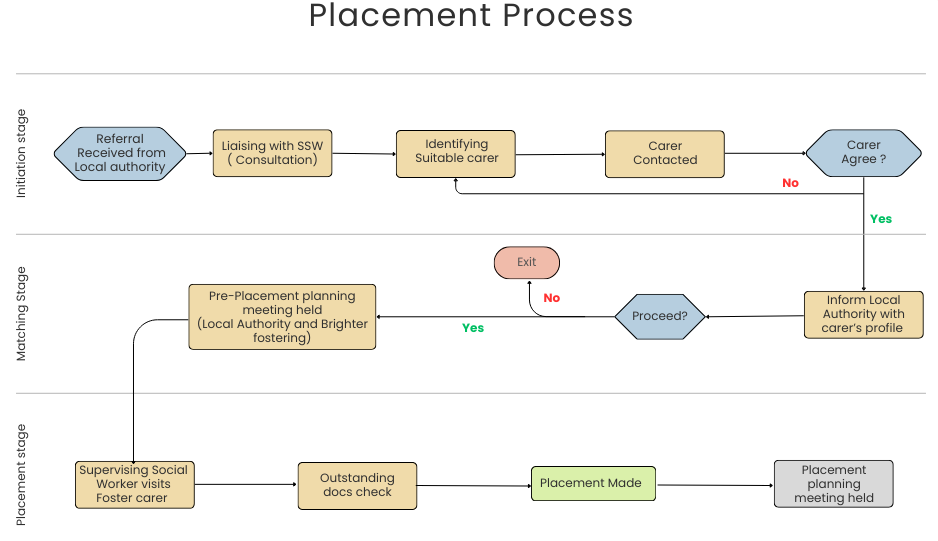
Behind these urgent decisions sits a structured placement process, designed to safeguard children and ensure accountability. However, the process also highlights just how quickly decisions may need to be made and where ethical pressures can arise.
The diagram illustrates how referrals are received, information is gathered, carers are identified, and decisions are made….sometimes within hours. While this structure is essential, it also reveals the emotional risk points. When time is short, children may arrive frightened and disoriented, and carers may have limited opportunity to prepare emotionally or practically.
From a psychological perspective, rushed placements increase the risk of poor matching. Even with the best intentions, speed can place strain on both the child and the carer, increasing the likelihood of placement instability.
Equally important is listening to the child. Wherever possible, children should be involved in placement decisions and transitions. Even small choices like what they bring with them, how their room is prepared, or how introductions are handled, can help restore a sense of control in a situation where so much feels decided for them.
Ethical foster care means asking not only “Can this placement work?” but “Does this placement respect who this child is?”
At Brighter Fostering, these risks are recognised. Staff work closely with local authorities to gather as much information as possible even under pressure to reduce emotional harm and ensure that decisions remain child-centred rather than convenience-led.
Why Psychologically Informed Practice Matters
The placement process diagram highlights an important truth: foster care is not a single decision, but a series of moments where empathy, judgement, and ethical responsibility are required.
Psychologically informed practice ensures that:
Speed never outweighs emotional safety
Procedure never replaces compassion
The child’s wellbeing remains central, even under pressure
When carers, professionals, and local authorities work together with a shared understanding of trauma, attachment, and identity, foster care becomes more than a safeguarding response, it becomes a pathway for healing.
Conclusion: Putting the Child First, Always
Foster care is not just about meeting immediate needs, it is about shaping futures. Across this series, we have explored how thoughtful matching, careful transitions, strong support systems, and ethical decision-making can transform a child’s experience of care.
Behind every placement is a child who needs to feel safe, valued, and understood. Achieving that requires empathy, preparation, and ongoing support from carers, professionals, and organisations working together.
At Brighter Fostering, the commitment is clear: to place children at the heart of every decision, to work in partnership with local authorities, and to ensure that care is guided not only by policy, but by humanity.
When foster care is approached with psychological insight and ethical care, it has the power to do more than protect. It has the power to heal.
The Transition, Support, and Long-Term Impact of Foster Care
In Part 1, we explored the heart of matching. A process that goes beyond logistics to create a sense of safety and belonging for every child. We saw how the right match can open the door to healing.
But what happens after that door opens? How do we turn an introduction into trust?
Let’s step into Part 2, where we uncover the transition phase, the delicate bridge between uncertainty and belonging.
The Transition Phase: Preparing for Belonging
A well-matched placement may open the door to healing, but it is the transition phase that determines how safely a child steps through it. For many children in care, transitions are not just logistical changes but also are emotional turning points, often shaped by uncertainty and fear of the unknown.
That is why pre-placement planning and introduction meetings play such a crucial role. Whenever possible, children are given the opportunity to visit the foster home, meet their carers, and begin to familiarise themselves with the environment they will be living in. Simple things like seeing photographs of the home, learning the names of carers, or knowing where they will sleep can significantly reduce anxiety.
From a psychological perspective, gradual familiarisation helps children regain a sense of control in situations where they may previously have felt powerless. Being prepared allows them to begin forming expectations, rather than imagining worst-case scenarios. It sends a powerful message: your feelings matter, and you are being considered.
At Brighter Fostering, this approach reflects a broader commitment to planned, thoughtful placements that prioritise emotional safety alongside physical care. Even when transitions must happen quickly, every effort is made to ensure children are supported, informed, and reassured because feeling safe is the foundation upon which trust is built.
Psychological Support Systems: A Network of Care
Even the most loving foster home cannot meet every emotional need alone. Healing from trauma is a journey, and it requires a strong, coordinated support system not just for the child, but for the foster carer too.
Brighter Fostering’s approach is rooted in partnership. Supervising social workers regularly visit foster homes, offering guidance, reassurance, and professional oversight. These visits are far more than formal requirements; they are opportunities to notice subtle emotional changes, address concerns early, and ensure that both child and carer feel supported and heard.
Children also benefit from Child Looked After (CLA) reviews, which bring together social workers, carers, and other professionals such as teachers or health practitioners. These reviews ensure that a child’s emotional, educational, and physical needs are being met and crucially, they provide children with a voice. Being listened to, and knowing that adults are working together on their behalf, can be deeply healing for children who may have felt overlooked or unheard in the past.
Foster carers, too, are supported through training, supervision, and access to practical and emotional tools that help them respond to complex behaviours with understanding rather than judgement. They are encouraged to reflect on progress, celebrate small victories, and seek help when challenges arise.
Alongside this, Brighter Fostering works closely with local authorities, ensuring carers and children have consistent access to safeguarding oversight, professional expertise, and specialist services. This collaborative approach reflects the organisation’s purpose of delivering a high-quality fostering service that places children at the centre of decision-making and care planning .
Initiatives such as the Activity Fund further enhance emotional wellbeing by enabling children to take part in hobbies, outings, and holidays. These experiences promote joy, confidence, and a sense of normality reminding children that they are allowed to enjoy childhood, not just survive it.
In many ways, these psychological support systems act as the scaffolding that holds a placement together. They ensure that no one be it child or carer must navigate this journey alone.
Long-Term Psychological Outcomes: From Stability to Growth
Foster care is not just about providing safety today , it is about shaping a child’s tomorrow. When placements are thoughtfully planned and emotionally supported, they can have a lasting impact on a child’s mental health, self-esteem, and sense of identity.
Children who have experienced trauma often carry deep emotional scars. With the right foster carer and consistent support, those scars can begin to heal. Over time, children may learn to trust again, express their emotions more openly, and form healthier relationships. These changes rarely happen overnight . They are slow, steady signs of resilience taking root.
Stability plays a key role in this process. When children know what to expect, feel emotionally secure, and are surrounded by adults who care, they begin to rebuild their sense of self. This stability supports identity formation and helps children believe that they are worthy of love and capable of success. Brighter Fostering recognises the importance of continuity, encouraging ongoing relationships where appropriate including maintaining contact with former carers. For children who have experienced repeated loss, this sends a powerful message: relationships do not always have to end abruptly.
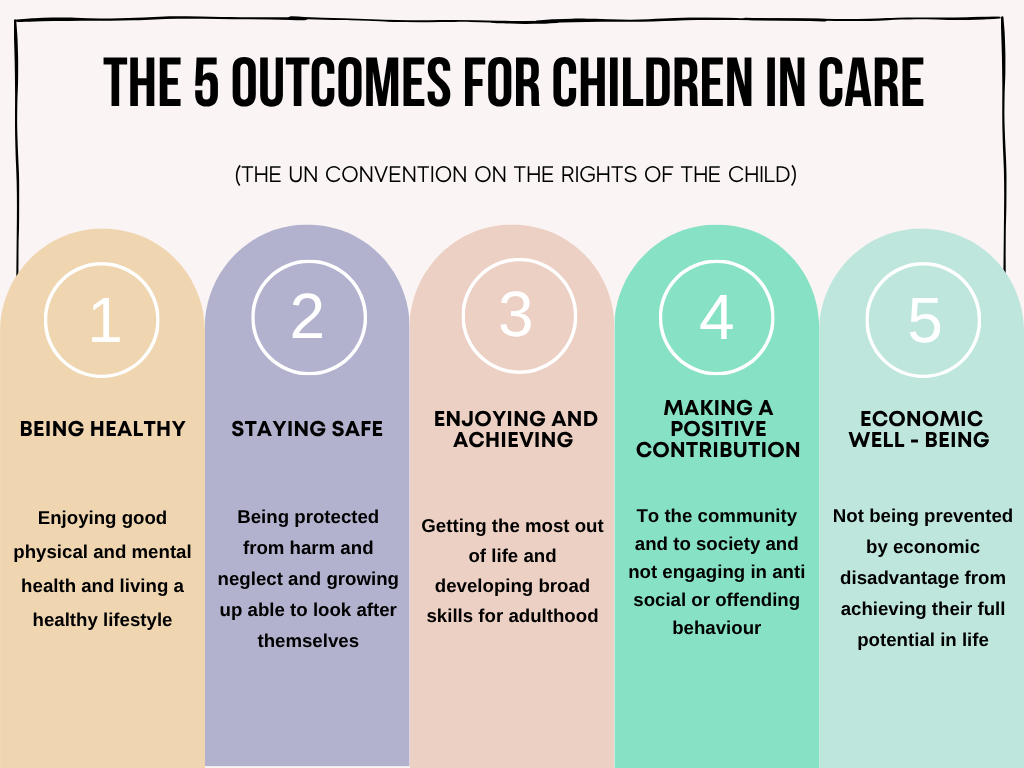
Long-term emotional support also aligns closely with the Five Outcomes for Children in Care, which guide best practice and reflect children’s holistic needs:
Being Healthy: Emotional security and therapeutic support help children improve their mental and physical wellbeing.
Staying Safe: Stable placements and strong professional oversight protect children from further harm.
Enjoying and Achieving: Encouragement, routine, and educational support allow children to re-engage with learning and personal interests.
Making a Positive Contribution: Feeling valued and understood enables children to build confidence and engage positively with others.
Economic Wellbeing: Emotional stability and positive experiences support long-term independence and future aspirations.
By embedding these outcomes into everyday practice, Brighter Fostering fulfils its stated purpose of delivering positive outcomes for young people, working in partnership with carers and local authorities to help children not only cope, but thrive .
In some cases, foster care becomes the turning point in a child’s life. The moment they move from surviving to truly living. With the right match, careful transitions, and consistent psychological support, foster care can offer more than safety. It can offer belonging, growth, and hope.
In Part 3, we will explore challenges, ethical considerations, and responsibilities involved in foster care and how thoughtful, child-centred practice helps ensure that even when things don’t go as planned, children’s emotional wellbeing remains at the heart of every decision.
Behind every placement there is a story that carries loss, uncertainty, and hope. It’s not just a change of address but it’s a shift in a child’s entire emotional world. Children don’t arrive in foster homes as blank slates. They bring memories, attachments, and invisible wounds that shape who they are. That’s why psychological understanding is essential. Not only to help a child begin healing but to make a placement that truly fits them.
When the right match is made, it can mark the beginning of a relationship that restores a child’s sense of safety and belonging.
At Brighter Fostering, we believe that matching a child with a foster family is a deeply human process. Every child has unique emotional needs and past experiences that shape their fears and their ability to trust again.
While we consider the child’s needs, we also ensure that the foster carer has the emotional capacity to offer not just a home, but also empathy, patience, and understanding.
It’s not simply about finding a family for a child, it’s about finding the right family for that specific child. This dual approach ensures emotional readiness on both sides.
On this note, let’s explore the journey of placing a child with a foster family.
Children thrive on consistency. Poorly matched placements can deepen feelings of rejection and instability. That’s why matching based on both emotional and practical needs is vital.
From a psychological perspective, children in care may struggle with attachment. If their early relationships were marked by neglect or inconsistency, trusting new adults, even kind and nurturing ones can be difficult.
They might test boundaries, withdraw emotionally, or act out as a way of protecting themselves from being hurt again.
At Brighter Fostering, our placement policy recognises this complexity. It emphasises understanding each child’s history, behaviour, health, identity, and culture before placement. This goes far beyond logistics, it’s about ensuring emotional safety. A child’s race, religion, language, and experiences influence how they feel in a new environment.
Matching them with a carer who honours and understands these aspects helps them feel seen and valued. When a child feels understood, healing begins. They can form new bonds and rediscover their self-worth.
Every child in foster care is on a deeply personal emotional journey. A foster carer’s role isn’t just to provide shelter but it’s also to offer a space where healing can start.
When a child enters a carer’s home, they often bring a mix of fear, confusion, and fragile hope. The carer’s patience and consistency are key. Children might test boundaries or reject affection, not because they don’t want love, but because they fear it won’t last.
Each calm, steady response from the carer rebuilds trust, showing the child that love can be safe, and people can stay.
At Brighter Fostering, we prioritise matching children with carers who have the right experience, strengths, and emotional support systems. It’s not just about having an extra bedroom instead it’s about having the heart and resilience to care for a child who’s been let down before.
We also ask practical questions:
How will the child be welcomed?
How will school runs and contact visits with birth family and friends be managed?
These questions, while practical, reveal emotional preparedness too, showing whether a carer is ready to create a safe, predictable environment.
We provide training and ongoing supervision to ensure carers feel supported. Alongside this, there is strong collaboration with the local authority, which plays a key role in offering professional guidance, resources and emotional backing throughout each placement.
The local authority’s involvement ensures that both the carer and the child have consistent access to expert advice, safeguarding oversight and network of professionals who are dedicated to their wellbeing. Because just like children, carers need to know they’re not alone. When carers feel emotionally equipped, they can offer the stability a child needs to heal.
Every thoughtful match lays a foundation for healing, but the journey doesn’t end here. A well-matched placement can open the door to healing but what happens next determines whether that door truly stays open.
Join us in the next part, where we’ll uncover the transition phase. A vital step that transforms an introduction into the beginning of trust.




Recent Comments